
Ceramic Products
Roof Tiles — Manufacturer, Wholesaler & Exporter
Ceramic roof tiles with low water absorption and a hard-fired body, built to shed rain and hold up under sun and thermal movement — supplied in bulk for housing and commercial roofs.
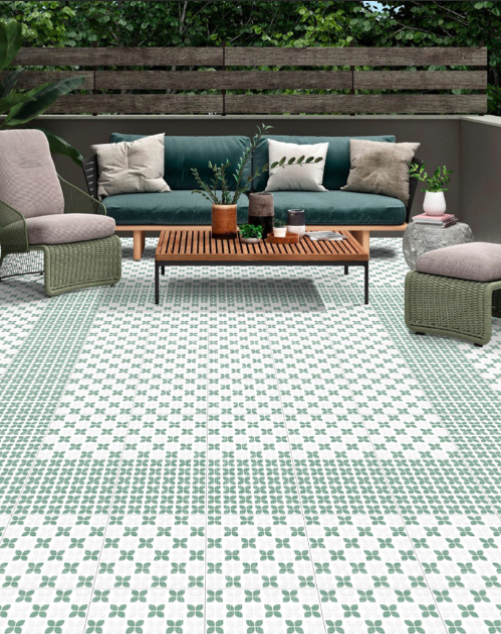
Roof tiles have one job — keep water out for decades while taking sun, rain and thermal movement. A dense, low-absorption ceramic body does that without the water uptake that leads to frost damage and moss.
Key features
- Low water absorption — a hard-fired body that doesn't soak up rain.
- Interlocking profile — tiles key into each other to resist wind lift and wind-driven rain.
- UV and colour stability — surface finish holds its colour under constant sun.
- Matching accessories — ridge, hip and end pieces made to each profile.
Manufacturing and testing
Roof tiles are pressed and high-fired for density and dimensional consistency, so they sit flat and interlock cleanly across a whole roof. Each batch is checked for water absorption, breaking strength and profile accuracy before packing.
Supply and export
Field tiles, ridge and hip pieces ship together as a complete roof package, palletised and container-loaded to keep the profiled edges intact. Our export desk handles the invoice, packing list, certificate of origin and any inspection your order requires, and can print your brand on the cartons.
Ranges, sizes and catalogues
Elegant and durable roof tiles.
-
All Roof Tiles
Frequently asked questions
What roof pitch do these tiles need?
Interlocking ceramic roof tiles are generally suited to pitched roofs above a minimum slope — confirm the exact figure for the profile you order, as it varies by design and by how much wind-driven rain your region gets.
Do you supply matching ridge and hip pieces?
Yes — ridge, hip and end pieces are made to match each profile. Order them with the field tiles so the roof ships complete.
How are roof tiles packed for export?
On edge in reinforced cartons, palletised and strapped like floor tiles, with the fragile profiled edges protected. Breakage is kept low with proper palletisation and tight container loading.