
Buyer's Guide
Choosing Slip-Resistant Tiles for Wet Areas
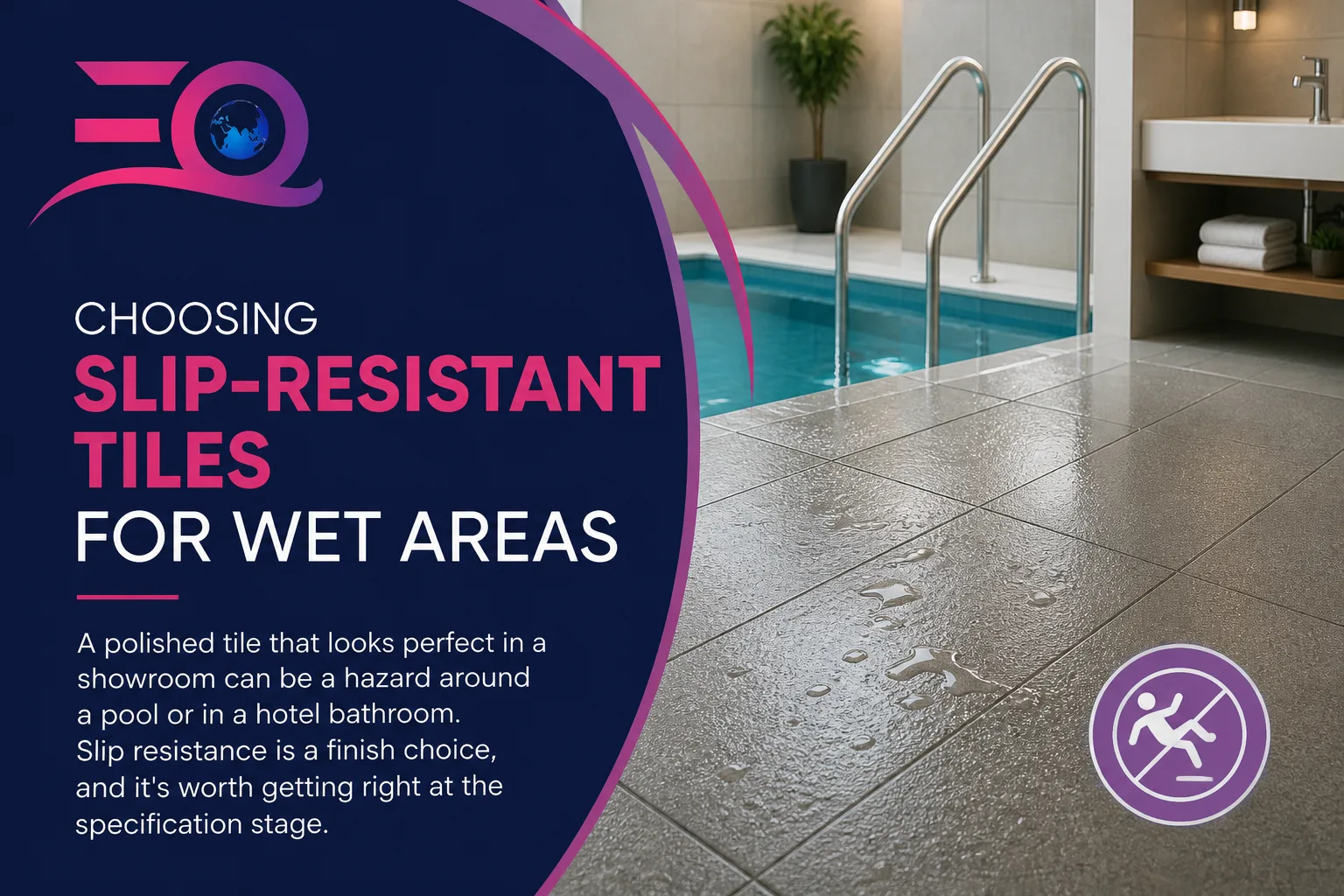
A polished tile that looks perfect in a showroom can be a hazard around a pool or in a hotel bathroom. Slip resistance is a finish choice, and it's worth getting right at the specification stage.
How the grip works
Slip resistance comes from what your foot or shoe can push against. A polished glaze is smooth, and a thin layer of water turns it into a low-friction surface. A textured finish — micro-grip matt, structural punch, satin anti-slip — breaks that water film and gives the contact patch something to hold. The rougher the texture, the more grip and the more the surface holds dirt, so it's a balance.
Rating systems
Different markets use different scales — the R rating (R9 to R13, tested with a shod foot on an oiled ramp) and the barefoot A/B/C classes are the common ones for wet areas. Ask your supplier which rating a given series carries, and match it to where the tile is going: a bathroom floor and a commercial kitchen have different requirements.
Where to specify it
- Bathroom and shower floors — textured floor tile; the walls can stay glossy.
- Pool decks and surrounds — a high grip rating, and often a matching bullnose and step tile.
- Kitchens, lobbies, ramps, external walkways — anywhere a wet shoe meets the floor.
- Parking areas — heavy structural anti-skid, which is a different, tougher product; see our parking tiles.
Specifying it on a project
Put the finish and, where your market uses one, the rating in the specification, not just "anti-skid". Order the wet-area tiles with matching skirting, step and bullnose pieces in the same finish so the whole zone is consistent.
Eternal Overseas manufactures anti-skid tiles in micro-grip matt, structural punch and satin finishes — see the anti skid tiles range or ask our team which finish suits your application.
Talk to our export desk More guides
Frequently asked questions
What makes a tile slip-resistant?
Surface texture. A micro-textured matt, structured 'punch' or grip finish gives the sole of a shoe or a bare foot something to key against, even with a film of water on it. A polished glaze doesn't.
Are anti-skid tiles harder to clean?
Slightly more than a polished tile, because texture holds dirt. They still wash with normal neutral cleaners — the trade-off is grip for a bit more scrubbing.
Where should slip-resistant tiles be specified?
Bathroom and shower floors, pool surrounds and decks, kitchens, entrance lobbies, ramps, external walkways, and any commercial floor that gets wet. Dry indoor floors can use whatever finish you like.