
Buyer's Guide
Vitrified vs Ceramic Tiles: What's the Difference?
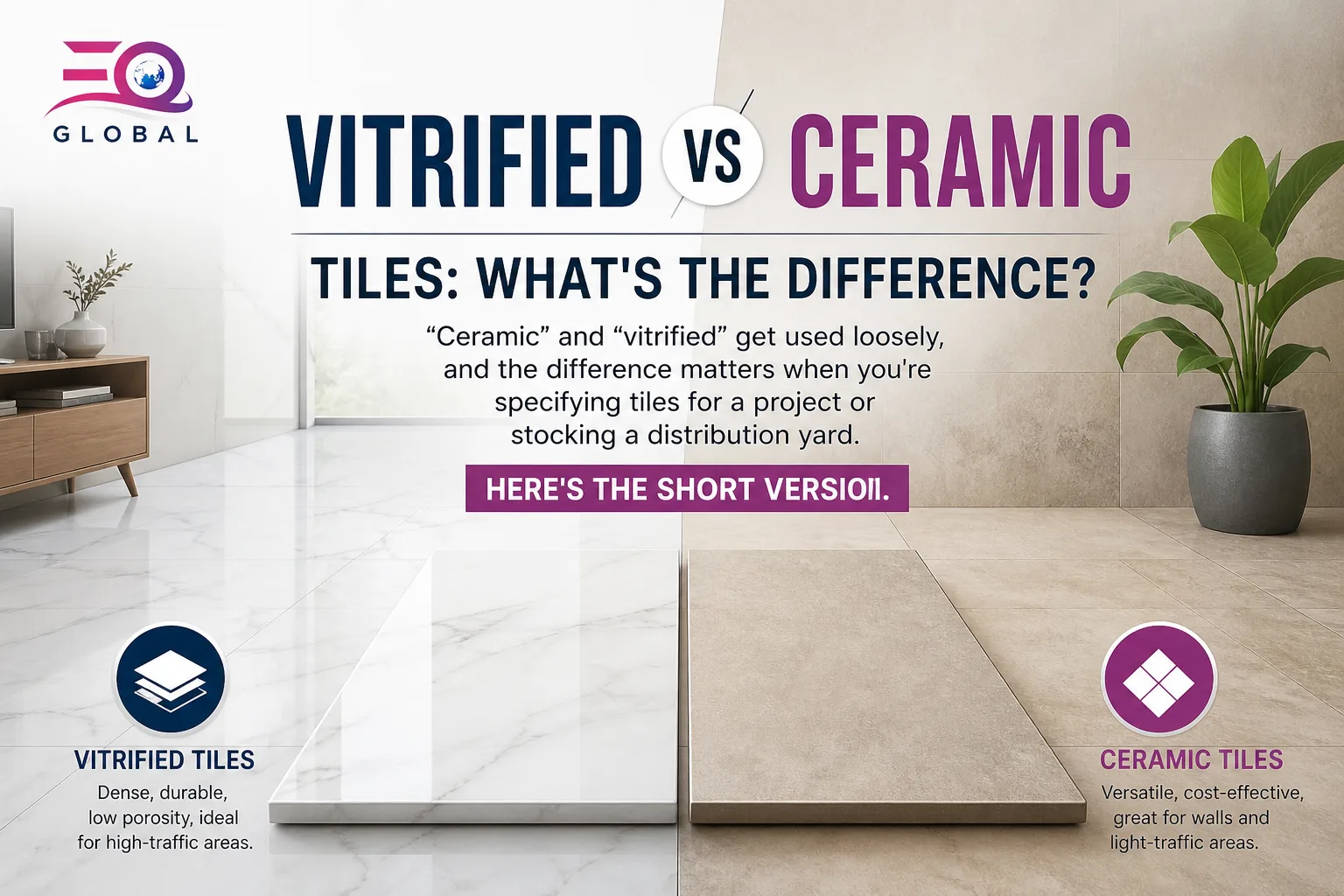
"Ceramic" and "vitrified" get used loosely, and the difference matters when you're specifying tiles for a project or stocking a distribution yard. Here's the short version.
How each one is made
Both start from clay, silica and feldspar, pressed and fired. The difference is how far the firing goes. Ceramic tile is fired at a lower temperature; the body stays slightly porous and is usually finished with a glaze that carries the colour and pattern. Vitrified tile is pressed harder and fired hotter, until the raw materials partly fuse into a glass-like mass — "vitrify" means to turn to glass. That closes the porosity right down.
Where the difference shows
Water absorption is the headline number. Fully vitrified and porcelain tiles absorb less than 0.5% of their weight in water; standard glazed ceramic can be several percent. Low absorption means the tile resists staining, frost damage and moisture getting under the floor.
Strength. A denser body carries more load without cracking, which is why vitrified tile goes into commercial floors, parking areas and anywhere with heavy foot or vehicle traffic.
Colour through the body. Full-body vitrified and double-charge tiles carry the colour deep into the tile, so a chip or a worn edge doesn't show a different colour underneath. Glazed tiles have the colour only on the surface layer.
Which to use where
- Interior walls, backsplashes, lighter residential floors — glazed ceramic is fine and often the better value.
- Commercial floors, high-traffic areas, outdoors, wet areas — vitrified or porcelain, with an anti-skid finish where slip matters.
- Showroom and premium residential floors — polished vitrified or double-charge for the finish, or glazed vitrified (GVT) for pattern range.
Eternal Overseas manufactures both — see the floor tiles and porcelain ranges, or ask our team which spec fits your project.
Talk to our export desk More guides
Frequently asked questions
Is porcelain the same as vitrified?
Effectively yes for most purposes — porcelain is a type of fully vitrified tile with very low water absorption. The terms are often used interchangeably in the trade.
Which is better for outdoor or wet areas?
Fully vitrified tiles, because their low water absorption means they don't take on moisture that can cause frost damage or staining. Pair that with an anti-skid surface finish for wet zones.
Is ceramic tile lower quality?
Not lower quality — different. Glazed ceramic wall tile is lighter, easier to cut, and perfectly suited to interior walls and lighter-traffic floors. It just isn't the choice for heavy commercial floors or outdoors.