
Buyer's Guide
Understanding Tile Sizes: A Guide for Importers and Distributors
Tile size drives price, freight, breakage risk and what your customers can actually lay. Here's how to think about it when you're placing an order.
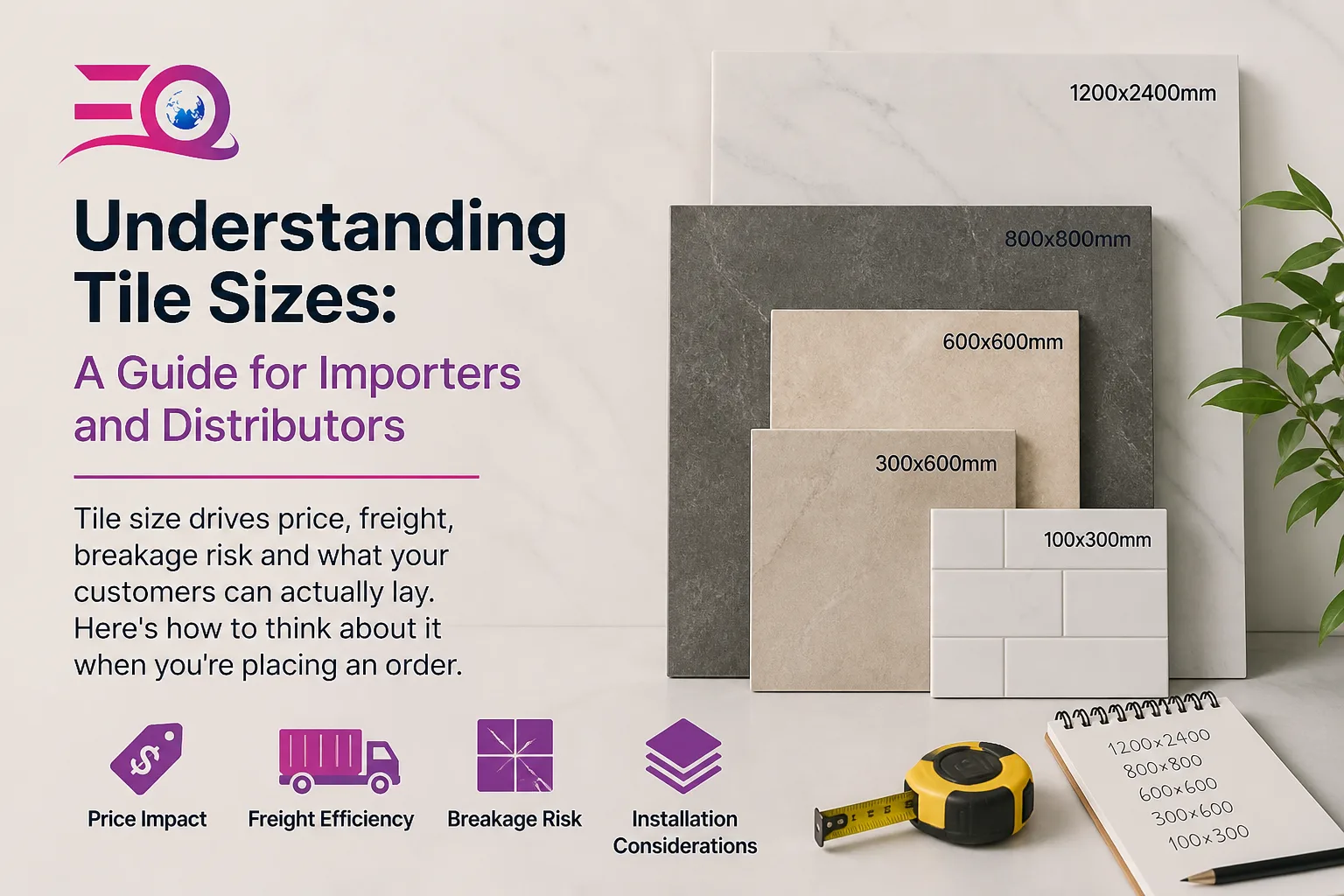
The common formats
- 300×300 mm — small floor tile, common for bathrooms, balconies and budget residential floors. Light, forgiving to lay, low breakage in transit.
- 400×400 and 500×500 mm — mid-size residential floor tiles.
- 600×600 mm — the workhorse floor size in most markets, in glossy, matt, sugar and carving finishes as well as double-charge and full-body vitrified.
- 300×450 / 250×375 / 300×600 mm — wall-tile formats, usually sold as a series with a matching décor and border.
- 600×1200, 800×1600, 800×2400, 800×3000, 1200×2400 mm and up — large-format and slab sizes for feature walls, commercial floors and worktops.
- Parking tiles — usually 300×300 or 400×400 with a heavy anti-skid surface.
- Step risers — sold in 3, 4 and 5-foot lengths with a matching tread.
Coverage and boxes
Every carton is printed with its coverage in square metres — that's the number to plan around, not the tile count. Divide the area you need by the coverage per box, round up, and add 5–10% for cuts and breakage. Our tile calculator does this, including box and cost estimates.
Freight and breakage
Bigger tiles need thicker bodies and heavier, more careful packing, so a container of 800×1600 slabs weighs out before it fills up, and per-piece breakage risk is higher. Small formats are the opposite — light, dense-packed, low breakage. Mixing sizes in one order is normal; tell us the split and we'll plan the load.
Which sizes sell where
This varies by market and changes over time, so the best guide is your own sales data. As a starting point, 600×600 and 300×300 cover most residential demand in many of the markets we ship to, with large format growing in commercial and upper-residential projects. Ask us what's currently moving to your region.
Talk to our export desk More guides
Frequently asked questions
How do I calculate how many tiles I need?
Room area in square metres divided by the coverage per box (printed on the carton), rounded up, plus 5–10% for cuts and wastage. Our tile calculator does this for you.
Are larger tiles more expensive?
Per square metre, often yes — large-format tiles need thicker bodies, more careful firing and heavier packing. But they lay faster with fewer grout lines, which can lower the installed cost on a big job.
Which sizes should a new distributor stock first?
600×600 and 300×300 cover most residential demand in many markets; add 300×600 wall tile and one large format once you know what your customers ask for.