
Buyer's Guide
Porcelain Manufacturers in India: Porcelain vs Vitrified, GVT, PGVT and Full Body Explained
Indian porcelain manufacturers use terms like vitrified, GVT, PGVT, double charge and full body. What each means, and how they relate to porcelain.
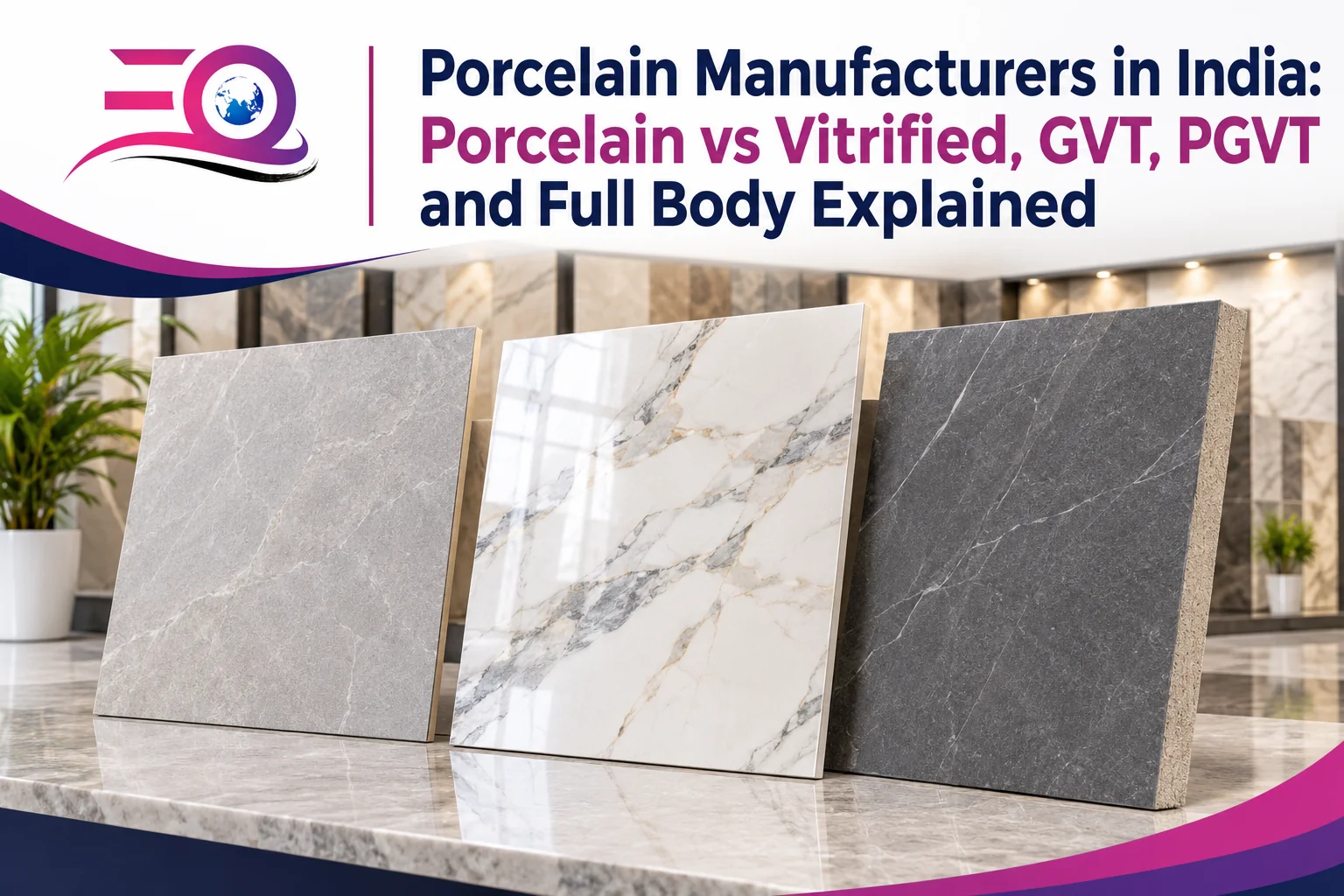
International buyers contacting porcelain manufacturers in India often meet unfamiliar terms: vitrified, GVT, PGVT, double charge, full body. Catalogues may use "porcelain" and "vitrified" side by side. Understanding what these terms mean helps you compare quotes accurately and order the right product for your market. See our porcelain manufacturers range.
For the basics of ceramic vs vitrified, read vitrified vs ceramic tiles.
What Makes a Tile "Porcelain"?
Internationally, porcelain tiles are defined mainly by very low water absorption, typically 0.5% or less, achieved by dense pressing and high-temperature firing. Standards such as ISO 13006 group tiles by water absorption, and tiles in the lowest absorption group correspond to what most markets call porcelain.
"Vitrified" in the Indian Market
In India, "vitrified tile" is the common trade term for tiles with a dense, low-absorption body. Many vitrified tiles meet porcelain absorption levels. When buying for export, ask for the measured water absorption rather than relying on the name alone.
Common Indian Tile Terms
| Term | Meaning | Typical use |
|---|---|---|
| GVT (glazed vitrified tile) | Vitrified body with a glaze and digital print | Wide range of designs, homes and offices |
| PGVT (polished glazed vitrified tile) | GVT with a polished high-gloss surface | Living areas, showrooms, lobbies |
| Double charge | Two layers of pigment pressed into the top few millimetres | High-traffic floors where wear resistance matters |
| Full body | Colour and composition consistent through the thickness | Heavy-traffic and outdoor areas where chips should not show |
| Slab or large format | Large sizes such as 800 x 1600 mm and above | Floors, walls, countertops, feature areas |
See our double charge tiles, polished tiles and big tiles.
Why the Distinction Matters for Buyers
- Specifications: architects may specify porcelain by absorption and strength, not by trade name.
- Durability: glazed tiles show wear differently from full body tiles on heavy-traffic floors.
- Customs and labelling: product descriptions should match technical data.
What to Ask Porcelain Manufacturers
- What is the measured water absorption?
- Is the tile glazed, double charge or full body?
- What is the breaking strength and surface finish?
- Are edges rectified?
- Which standards are the tiles tested to?
Eternal Overseas Porcelain Range
Our porcelain and vitrified range includes 600 x 600, 800 x 800, 800 x 1600 and large formats up to 1600 x 3200 mm, in polished gloss, matt and textured slip-resistant finishes with factory-rectified edges. Read our porcelain tile manufacturers article and see all ceramic products.
Key Takeaways
- Porcelain is defined mainly by very low water absorption.
- In India, 'vitrified' is the common trade term for dense, low-absorption tiles.
- Ask for measured data, not just names, when comparing quotes.
Example: Matching a European Specification
A European contractor's specification required porcelain tiles with water absorption of 0.5% or less. The Indian catalogue listed the product as GVT. By asking for test data, the contractor confirmed the absorption met the requirement and ordered confidently, with the technical data attached to customs and project documents.
Common Mistakes
- Assuming every vitrified tile meets porcelain absorption
- Choosing glazed tiles for areas where full body is needed
- Comparing quotes for different tile types as if they were equal
The Bottom Line
Names differ between markets; measured data does not. Ask porcelain manufacturers for water absorption, strength and finish data, and compare like with like.
Next Steps
Share your project specification and target market with our team, and we will match it to porcelain or vitrified lines with the right technical data and finish. We can send samples and test data before you place a bulk order, so your team can check them against the specification.
About Eternal Overseas
Eternal Overseas is based in Morbi, Gujarat, India's ceramic hub, and supplies ceramic tiles, sanitary ware, PVC and electrical products to importers, distributors and contractors in more than 50 countries. See our quality control, certifications and global presence.
Related Reading
- Porcelain tile manufacturers
- Vitrified vs ceramic tiles
- Porcelain B2B exporters: shade, calibre and pre-shipment inspection
Talk to our export desk More guides
Frequently Asked Questions
What is the difference between porcelain and vitrified tiles?
Porcelain is defined internationally by very low water absorption, typically 0.5% or less. In India, 'vitrified' is the trade term for dense, low-absorption tiles, many of which meet porcelain levels.
What does GVT mean?
Glazed vitrified tile: a vitrified body with a glaze and digitally printed design.
What is PGVT?
Polished glazed vitrified tile: a GVT with a polished high-gloss surface.
What is a double charge tile?
A tile with two layers of pigment pressed into the top few millimetres, giving good wear resistance for high-traffic floors.
What is a full body porcelain tile?
A tile whose colour and composition are consistent through its thickness, so chips are less visible.
Request Porcelain Specifications
Request a quote, message us on WhatsApp, call +91 94082 15556 or email sales@eternaloverseas.com.