
Buyer's Guide
Parking Tiles Manufacturers: Specifications to Check and How to Install Parking Tiles
What to look for from parking tiles manufacturers: body type, surface designs, load and slip performance, sizes, and how to install parking tiles properly.
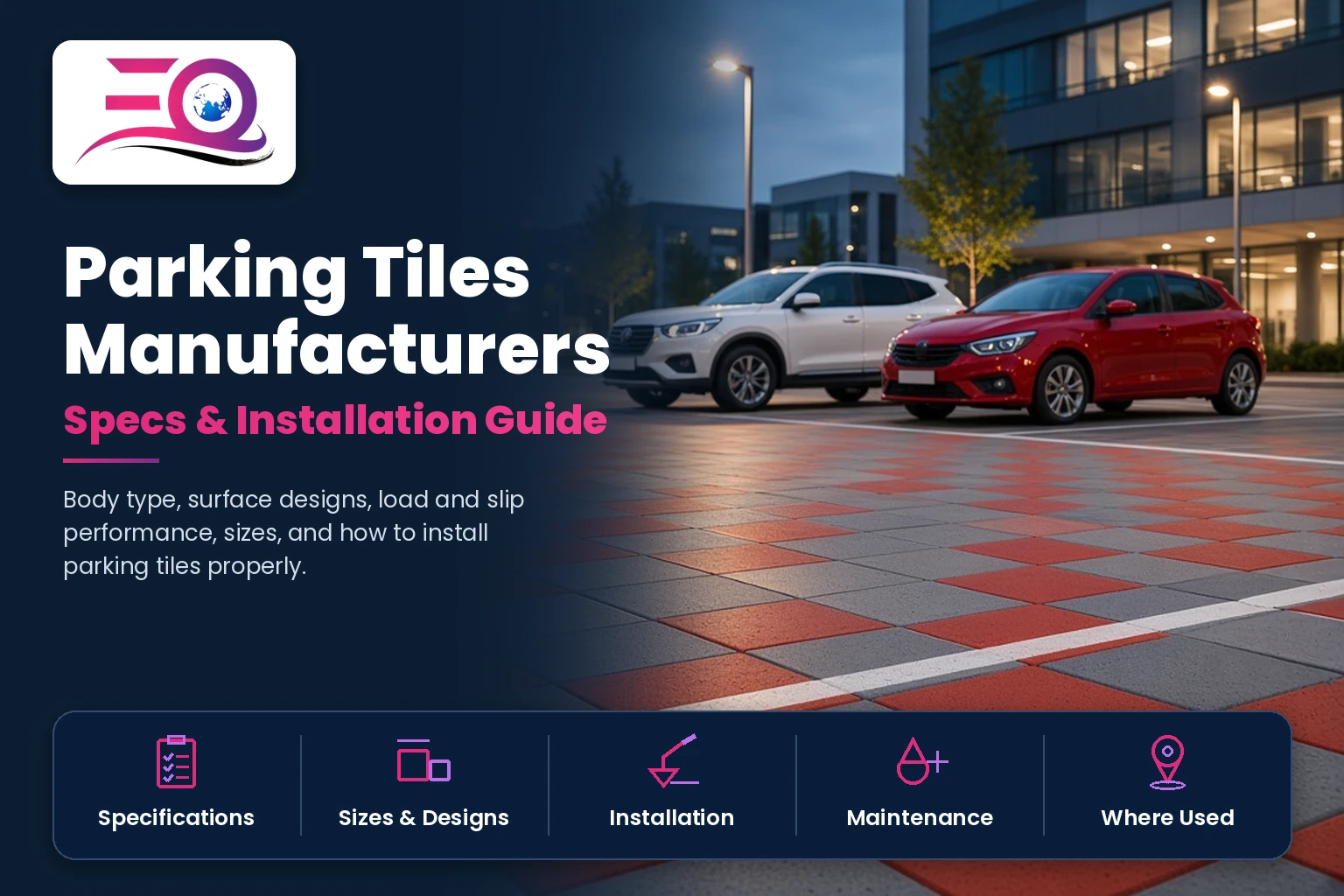
Parking areas punish tiles. Car tyres turn and brake on them, oil drips onto them, rain and sun beat down on them, and the ground beneath can shift. A tile that looks fine in the showroom can crack, lose its grip or fade within a season if it was not made for this job.
This guide explains what separates a real parking tile from a decorative outdoor tile, the specifications to compare between parking tiles manufacturers, and how installation affects performance.
What Makes a Parking Tile Different
- Thicker, denser body: to resist cracking under wheel loads.
- Textured surface: punch, rustic or cobble patterns that give tyre and foot grip, even when wet.
- Low water absorption: limits damage from moisture and, in cold climates, frost.
- UV-stable colours: so the surface does not fade in direct sun.
- Stain resistance: to cope with oil and dirt.
How Parking Tiles Are Made
Parking tiles are pressed on high-tonnage hydraulic presses and fired at high kiln temperatures to create a dense, low-porosity body. The surface pattern is formed during pressing, which is why textures such as punch designs are part of the tile rather than a coating. Eternal Overseas produces heavy-duty vitrified and full-body exterior pavers in Morbi and runs load-bearing tests on every batch.
Specifications to Compare
| Specification | Why it matters |
|---|---|
| Body type | Vitrified or full-body tiles are denser and wear more evenly |
| Thickness | Thicker tiles resist cracking better under wheel loads |
| Breaking strength | Indicates how much load a tile can take before failing |
| Water absorption | Lower absorption means better durability outdoors |
| Slip resistance | Essential for wet ramps and driveways |
| Abrasion resistance | Determines how long the texture lasts under traffic |
| Edge profile | Bevelled edges reduce chipping from tyres |
Ask manufacturers for test values on each of these, not just brochure descriptions. Learn more about grip in slip-resistant tiles for wet areas.
Sizes and Surface Designs
Parking tiles are commonly made in 300 x 300 mm and 400 x 400 mm formats. Smaller formats handle loads and uneven bases better, while larger formats cover area faster. Eternal Overseas offers punch, rustic slate, plain and step plain designs in 300 x 300 mm, and plain, punch and rustic series in 400 x 400 mm.
Installation: Where Most Failures Start
- Prepare a solid base: compact the sub-base and lay a concrete bed suited to the expected traffic.
- Plan drainage: give the surface a gentle slope so water runs off and does not collect under tiles.
- Use the right bedding: lay tiles on a full mortar bed or suitable exterior adhesive, avoiding hollow spots that crack under wheels.
- Leave joints: keep consistent joints and fill them fully with an exterior-grade grout.
- Allow movement joints: add expansion joints across larger areas.
- Cure before use: keep vehicles off until the bed and grout have cured.
For heavy commercial vehicles or loading bays, ask a civil engineer to confirm the base design and tile choice for the expected axle loads.
Maintenance
- Sweep regularly and pressure-wash periodically to clean textures.
- Clean oil spills quickly with a suitable degreaser.
- Replace damaged tiles early to protect the base underneath.
Where Parking Tiles Are Used
Residential driveways, multi-storey car parks, commercial driveways, petrol stations, ramps, loading areas and walkways. For stairs and steps leading to these areas, see step tiles and step tiles for stairs.
About Eternal Overseas
Eternal Overseas is based in Morbi, Gujarat, India's ceramic hub, and supplies ceramic tiles, sanitary ware, PVC and electrical products to importers, distributors and contractors in more than 50 countries. See our quality control, certifications and global presence.
Related Reading
- Parking tiles wholesaler: a bulk buying guide
- Slip-resistant tiles for wet areas
- Step tiles for stairs
Talk to our export desk More guides
Frequently Asked Questions
How are parking tiles different from normal floor tiles?
Parking tiles have a thicker, denser body, a textured anti-skid surface and low water absorption, so they can handle vehicle loads, weather and oil better than ordinary floor tiles.
What sizes do parking tiles come in?
Common sizes are 300 x 300 mm and 400 x 400 mm. Eternal Overseas offers punch, rustic slate, plain and step plain designs in these formats.
Why do parking tiles crack?
Most cracks come from a weak or uneven base, hollow spots under tiles, poor drainage or vehicles driving on tiles before the bed has cured, rather than from the tile itself.
Are parking tiles suitable for heavy vehicles?
Heavy-duty parking tiles are designed for vehicle loads, but for heavy commercial vehicles a civil engineer should confirm the base design and tile choice for the expected axle loads.
How do I clean parking tiles?
Sweep regularly, pressure-wash periodically and clean oil spills promptly with a suitable degreaser.
Get Parking Tile Samples and Specifications
Request a quote, message us on WhatsApp, call +91 94082 15556 or email sales@eternaloverseas.com.